
Key Takeaways
-
Match the massage type to your goal: sports massage suits recovery and performance, while therapeutic massage targets pain relief and healing, so choose based on what your body needs.
-
Book regular sessions for maintenance instead of waiting for pain to become severe, since small tension caught early is much easier to release than stubborn knots.
-
Communicate clearly with your therapist by noting your top three problem areas, mentioning injuries or conditions, and giving feedback on pressure during and after the session.
-
Avoid the 'no pain, no gain' mindset, because a massage that causes clenching or breath-holding can tighten muscles; aim for a productive 'good hurt' that still lets you breathe.
-
Choose mobile massage to remove travel stress and rest immediately afterward, then drink plenty of water and avoid heavy training for several hours after deep work.
-
Verify your therapist's licensing and experience, and review pricing upfront, since poor credentials can lead to soreness or injury during a session.
Let’s be honest: most of us treat massage like a luxury we squeeze in when everything hurts. Then we book the wrong kind, show up unprepared, or skip the follow-up that makes it work. Sound familiar? You’re not alone, and the good news is that these mistakes are easy to fix.
Whether you’re a weekend runner, a business traveler stiff from a long flight, a busy professional glued to a desk, or a senior dealing with achy joints, sports and therapeutic massage can make a real difference. But only if you do it right. In this friendly guide, we’ll walk through eight common mistakes and show you how to avoid each one. By the end, you’ll know exactly how to get more relief from every session, especially when the therapist comes straight to your home or hotel room in Tampa Bay, Clearwater, or St. Pete.

What Are Sports and Therapeutic Massage, Really?
Sports and therapeutic massage are hands-on techniques that target muscle tension, pain, and recovery. Sports massage focuses on active people. It helps muscles recover after training and prepares your body for the next effort. Therapeutic massage is broader. It aims to relieve pain, ease stiffness, and support overall healing.
The two overlap a lot. A therapist might use deep pressure on a tight calf, then switch to slow, gentle work on a sore shoulder. You don’t need to be an athlete to benefit. If you move, sit, stand, lift, or travel, your body can use this kind of care.
The American Massage Therapy Association’s guidance on massage therapy for pain relief notes that massage can be a helpful part of managing pain and muscle discomfort. That’s a big reason more people are choosing it as part of their regular wellness routine.
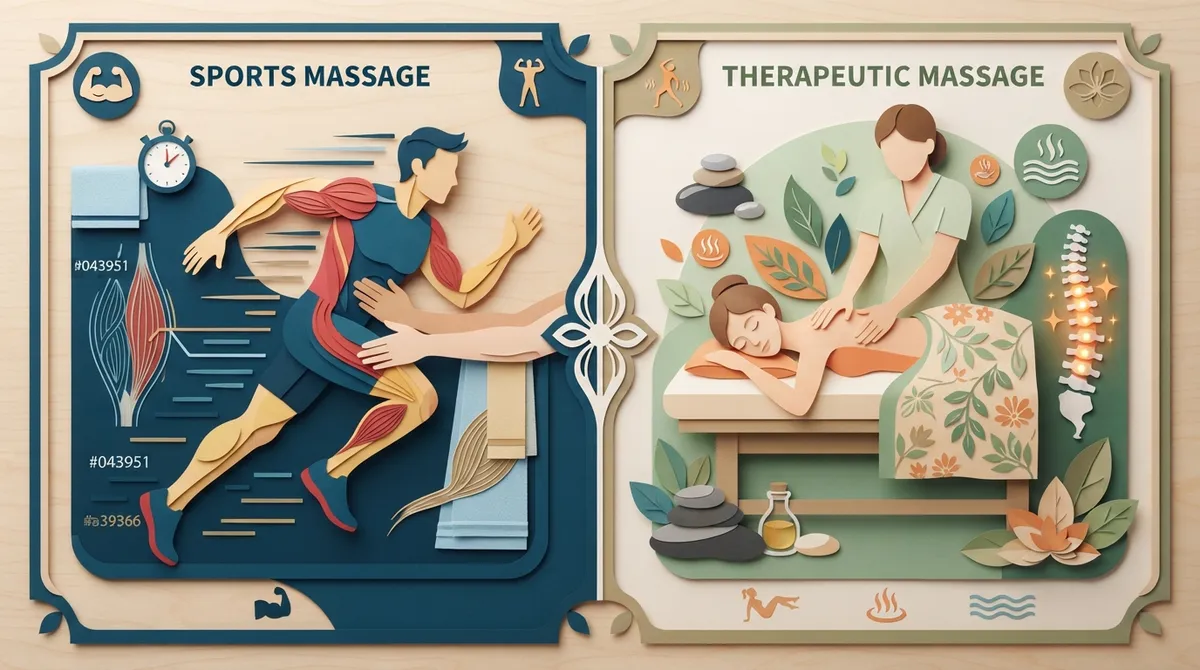
Quick Comparison: Sports vs. Therapeutic Massage
| Feature | Sports Massage | Therapeutic Massage |
|---|---|---|
| Main goal | Recovery and performance | Pain relief and healing |
| Best for | Runners, gym-goers, athletes | Desk workers, seniors, travelers |
| Pressure | Firm to deep | Light to deep, based on need |
| Common techniques | Deep tissue, stretching, trigger points | Deep tissue, hot stones, lymphatic work |
| When to book | Before or after hard training | Anytime you feel tight or sore |
Mistake #1: Picking the Wrong Type of Massage
This is the big one. Many people book a relaxation massage when their body really needs deeper work. Others go for deep pressure when gentle work would serve them better.
Think about your goal first. Ask yourself:
- Am I sore from a hard workout or a long run?
- Do I have a stiff neck from sitting at a desk all day?
- Am I dealing with swelling or heaviness in my legs?
- Do I just need to unwind and sleep better?
Your answers point you to the right session. Deep tissue suits stubborn knots. Lymphatic drainage helps with swelling and heaviness. Relaxation work calms a stressed mind. At Mobile Area Massage of Tampa Bay, our full list of services includes all of these, so you can match the therapy to your needs. And here’s a perk: every therapy is charged strictly by time, with no extra fees for deep tissue, analgesic oils, facials, or reflexology.
Mistake #2: Waiting Until the Pain Gets Bad
Many of us ignore tight muscles until they scream. By then, the problem has grown, and recovery takes longer. Massage works best as maintenance, not just a rescue mission.
Athletes and active people do well with regular sessions. A little tension caught early is much easier to release than a deep, stubborn knot. If you train hard, check out our tips on using deep tissue massage to boost athletic recovery.
Think of it like an oil change for your body. Skipping it might feel fine for a while. Then one day, things grind to a halt.
Mistake #3: Skipping the Conversation With Your Therapist
Your therapist isn’t a mind reader. If you stay quiet, you might get a session that misses the mark. Tell them where it hurts, what you do for work or sport, and how much pressure feels right.
Here’s a simple way to prepare:
- Note your top three problem areas before the session.
- Mention any injuries, surgeries, or health conditions.
- Share your activity level, such as running, golf, or long desk hours.
- Speak up during the session if the pressure is too much or too light.
- Give feedback at the end so next time is even better.
Good communication makes every minute count. We cover this more in our guide on how to communicate your needs to your therapist.
Mistake #4: Booking Only When You Have Free Time to Travel
Here’s a sneaky mistake. Many people skip massage because getting to a spa feels like a chore. You drive, park, wait, get the massage, then drive home while the benefits fade in traffic. That’s a lot of effort for relaxation!
Mobile massage solves this. The therapist brings the table, linens, and oils to you. You stay in your comfy space, and when the session ends, you simply rest. No rush, no traffic.
This is especially handy for:
- Business travelers: Skip the rideshare and get worked on in your hotel room after a long flight or a packed meeting day.
- Busy professionals: Fit a session into your evening without losing precious hours.
- Seniors: Avoid the stress of driving or walking long distances with stiff joints.
- Athletes: Get recovery work right after training while your muscles still need it.
Curious how it all works? Our guide to getting deep tissue sports massage at your hotel or home walks you through it step by step.
Mistake #5: Ignoring Rest and Water After Your Session
You walk out of a great massage feeling like a noodle, then jump straight into a hard workout or a packed schedule. Your body just did a lot of work. Give it a little time to settle.
After a session, try to:
- Drink plenty of water throughout the day.
- Avoid heavy training for several hours if you had deep work.
- Do light stretching to keep muscles loose.
- Rest or take a warm shower to extend the relaxation.
This is where mobile massage shines again. Since you’re already home or in your hotel room, you can slide right into rest mode. No drive, no rush, just recovery.
Mistake #6: Thinking More Pressure Always Means Better Results
Some folks believe a massage only works if it hurts. That’s a myth. Pain can make your muscles tighten up and fight back, which defeats the whole point.
Good sports and therapeutic massage should feel like a “good hurt,” the kind that feels productive but still lets you breathe. If you’re clenching your jaw or holding your breath, tell your therapist to ease up.
Different techniques serve different needs. Deep tissue targets deeper muscle layers. Hot stones with analgesic oils soften tight areas before deeper work. Lymphatic release uses very light touch to move fluid. For more on gentle techniques, read about lymphatic drainage massage techniques that actually work.
Mistake #7: Forgetting That Your Mind Needs Care Too
Sore muscles and a stressed mind often travel together. When you’re tense, your shoulders creep up, your jaw tightens, and your sleep suffers. A great session can calm both body and brain.
Research summarized by the American Massage Therapy Association points to real massage therapy for mental health benefits, including less stress and better mood. That matters whether you’re prepping for a big game, a big meeting, or just a big week.
If you’re an athlete, a calm mind helps performance too. If you’re a traveler, it helps you handle jet lag and unfamiliar beds. Pairing therapeutic work with a bit of aromatherapy or a relaxing face massage can take that mental reset even further.
Mistake #8: Hiring Without Checking Credentials
This last mistake is the most important for your safety. Not every provider is qualified, and a poor session can leave you sore or even hurt. Always make sure your therapist is properly licensed and trained.
The Florida Department of Massage Therapy mobile endorsement information is a great place to learn what’s required for mobile practice in the state. Look for a provider with real experience, clear pricing, and good reviews.
Mobile Area Massage of Tampa Bay brings over 70 years of combined experience to every visit. Our team serves homes and hotels across Tampa Bay, Clearwater, and St. Pete, and we’re open seven days a week. You can even visit us on Google — Mobile Area Massage of Tampa Bay to see what real clients say about their experience.
Simple Pricing, No Surprises
Another way to avoid mistakes is to know the cost upfront. Here’s how our time-based pricing works:
| Session Length | Price |
|---|---|
| 60 Minutes | $119 |
| 90 Minutes | $159 |
| 2 Hours | $199 |
| 3 Hours | $299 |
| 4 Hours | $399 |
Every therapy is charged strictly by time. That means no upcharge for deep tissue, hot stones, analgesic oils, facials, or reflexology. You can see all the details on our pricing page.
How Long Should Your Session Be?
Choosing the right length is part of getting the most from sports and therapeutic massage. A quick 60-minute session works well for one or two problem areas, like a tight back and shoulders. If you want full-body work, 90 minutes gives your therapist enough time to cover everything without rushing.
For athletes after a big event, or anyone with lots of tension, a two-hour session can be a game changer. Longer sessions of three or four hours are great for special occasions, deep recovery, or sharing time with a group.
A Quick Word on Who Benefits Most
Almost everyone can get something out of this type of bodywork. Here’s a quick look:
- Athletes and fitness fans: Faster recovery, less soreness, and better flexibility.
- Busy professionals: Relief from desk-related neck, back, and shoulder strain.
- Business travelers: A way to undo the stiffness of flights and long meetings, right in the hotel room.
- Seniors: Gentle relief for stiffness and chronic aches without leaving home. See our page on mobile massage for chronic pain for more.
If you have a serious injury or medical condition, talk with your doctor first. For tailored support, you can also explore partner resources like Healthcare Solutions Team Brandon for broader wellness guidance.
Putting It All Together
Here’s a simple game plan to avoid these eight mistakes:
- Pick the massage type that matches your goal.
- Book regularly instead of waiting for pain.
- Talk openly with your therapist.
- Choose mobile service so you can rest right after.
- Drink water and take it easy post-session.
- Skip the “no pain, no gain” mindset.
- Care for your mind as well as your muscles.
- Always check credentials and reviews.
That’s it. Nothing fancy, just smart choices that help you feel better, move better, and recover faster.
Ready to Feel Better?
Sports and therapeutic massage shouldn’t be stressful to arrange or confusing to understand. When you avoid these common mistakes, every session works harder for you. And when the therapist comes to you, relief is just a few taps away.
Mobile Area Massage of Tampa Bay is here seven days a week, bringing skilled, experienced therapists to your door or hotel room. Ready to give your body the care it deserves? Request an appointment today and let us take care of the rest. Your muscles will thank you!
FAQs
Q: What is the difference between sports massage and therapeutic massage?
A: Sports massage focuses on recovery and performance for active people, while therapeutic massage aims at pain relief and overall healing. The two share many techniques, like deep tissue work, so you can often get the best of both in one session. Your therapist can blend them based on your goals!
Q: How often should I get a sports or therapeutic massage?
A: It depends on your lifestyle. Active folks and athletes often do well with a session every one to two weeks, while others may enjoy monthly care. Listen to your body, and your therapist can help you find a schedule that fits.
Q: Does mobile massage work as well as a spa visit?
A: It absolutely can! Our therapists bring the same skills and professional setup right to your home or hotel room. Plus, you get to relax afterward without any travel, which helps your body keep soaking in the benefits.
Q: How much does a mobile massage cost with Mobile Area Massage of Tampa Bay?
A: Pricing is simple and based only on time: $119 for 60 minutes, $159 for 90 minutes, $199 for 2 hours, $299 for 3 hours, and $399 for 4 hours. There are no extra fees for deep tissue, oils, facials, or reflexology.
Q: Do I need to prepare anything before my mobile massage?
A: Not much at all! Just pick a quiet spot with a little room for the table, and let your therapist know about any sore areas or health concerns. We bring everything else, so all you need to do is relax.